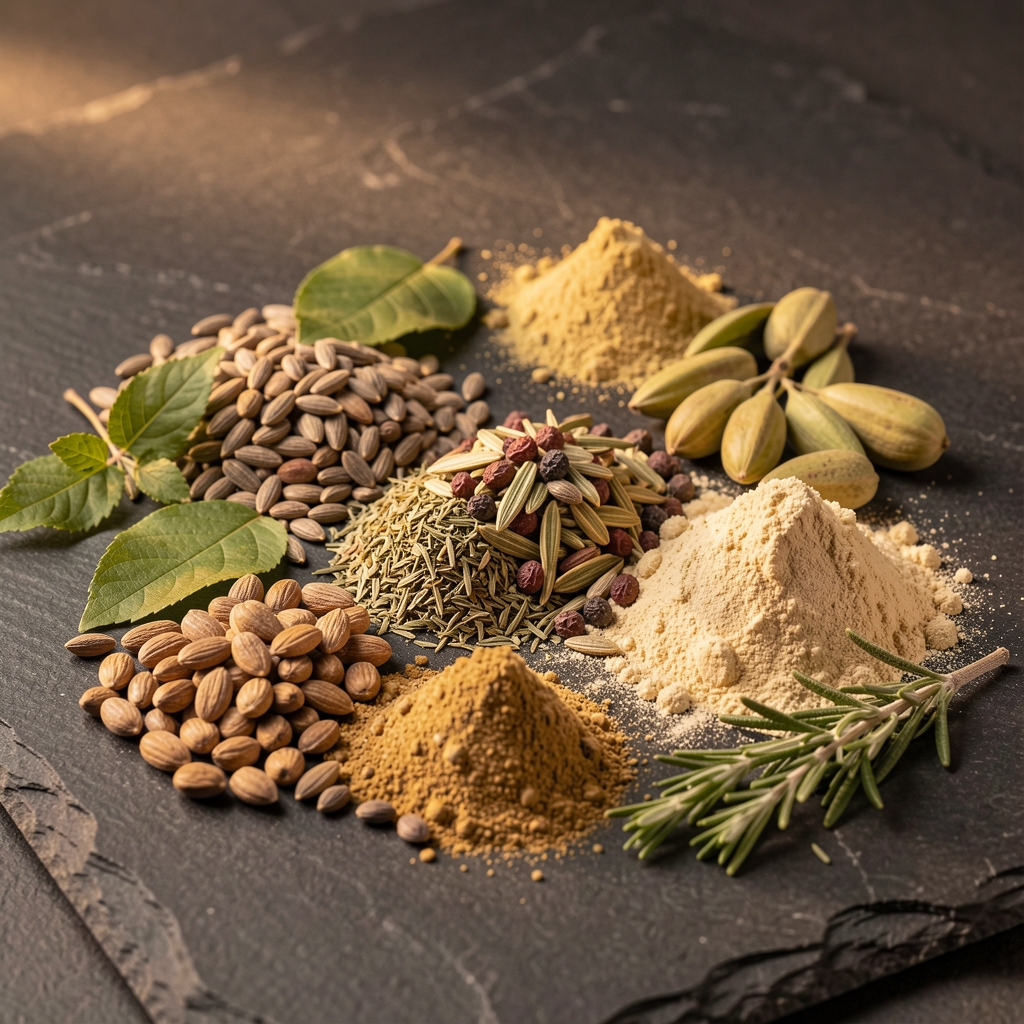
The word "adaptogen" is used more frequently than it is defined. In the nutritional supplement literature, it typically refers to a category of botanical ingredients characterised by their documented capacity to contribute to the body's response to physical and cognitive stress. The research base on the three most commercially prominent adaptogens — ashwagandha, rhodiola rosea, and panax ginseng — is substantial, but uneven. This article records what the published evidence base actually shows, where gaps remain, and what the sourcing quality considerations look like for each.
Defining the Category: What the Research Classifies as Adaptogenic
The term "adaptogen" was formalised in Soviet sports-science literature in the late 1940s, with subsequent elaboration through Swedish and North American nutritional pharmacognosy research in the 1990s and 2000s. A working definition used in contemporary published research describes an adaptogenic ingredient as one that (a) produces a non-specific resistance response to stressors, (b) has a normalising effect on physiological indicators of strain, and (c) does not cause adverse functional changes at standard use levels.
The practical implication of this three-part framework is that not every plant with a documented stress-modulating compound qualifies as adaptogenic under a strict reading. Certain bitter melon preparations, for example, show glucose-modulating properties in specific research contexts but do not demonstrate the normalising breadth that the three-part framework requires. For editorial purposes, this article addresses only the three ingredients with the strongest published evidence base for the active-male demographic: ashwagandha, rhodiola rosea, and panax ginseng.
Ashwagandha: Evidence, Standardisation, and Sourcing
Ashwagandha (Withania somnifera) is the most researched adaptogen in the contemporary nutritional literature for the active-male demographic. The primary active constituents — withanolide glycosides and alkaloids — have been studied in the context of perceived stress markers, physical endurance assessments, and sleep quality indices. The methodological quality of the published trials is variable; the better-designed studies use standardised extracts, double-blind protocols, and validated outcome measures.
The standardisation issue is central to interpreting the research correctly. Many published ashwagandha studies use KSM-66 or Sensoril extracts — two commercially standardised forms with defined withanolide percentages and published pharmacokinetic profiles. Results from studies using these specific extracts do not necessarily transfer to unstandardised raw ashwagandha powder or to extract forms with different withanolide concentrations. When evaluating an ashwagandha-containing formulation, the relevant questions are: what extract form is used, what is the withanolide percentage, and does the formulation's documentation match the extract type referenced in the supporting research?
In the Indonesian ingredient supply landscape, ashwagandha is almost entirely imported — predominantly from India, which accounts for the majority of global ashwagandha cultivation. Traceability documentation for Indonesian-market ashwagandha should therefore include country-of-origin certification, CoA from the point of import, and third-party heavy metal and pesticide residue testing. Rajasthan-grown ashwagandha, the dominant commercial variety, has a well-established supply chain with multiple KAN-accredited laboratory partnerships in Indonesia for verification purposes.
"Research findings from standardised extracts do not automatically extend to unstandardised forms. The gap between the published study and the product on the shelf is often a sourcing and documentation question."
Rhodiola Rosea: What the Fatigue Research Shows
Rhodiola rosea has a shorter commercial history than ashwagandha in the Indonesian supplement market but a comparable published evidence base for fatigue-related outcomes. The primary active constituents are rosavins and salidroside, with commercial extracts typically standardised to 3% rosavins and 1% salidroside — a ratio that reflects the naturally occurring balance in Siberian-grown rhodiola root.
Published research on rhodiola includes a European wellness products Agency (EMA) monograph, which documents its traditional use for the temporary alleviation of fatigue-related phenomena. The EMA monograph is relevant because it represents a systematic assessment of the available literature by a regulatory body, rather than a single industry-sponsored trial. For editorial purposes, the EMA classification provides a baseline for assessing what published evidence characterises as the established use profile of this ingredient.
Sourcing quality is a significant variable for rhodiola. The plant is cultivated across a wide geographic range — from Siberia to Scandinavia to high-altitude Asian cultivation zones — and the active constituent profile varies by altitude, harvest season, and processing method. Siberian and Altai-region rhodiola is generally regarded as the reference standard in the published phytochemistry literature, with Russian and Swedish supply chains having the longest documented quality history. Indonesian-market rhodiola is imported; documentation of geographic origin and post-import CoA verification is particularly important given the active constituent variability across source regions.
- Adaptogen research findings are extract-specific; results from KSM-66 ashwagandha do not automatically extend to raw powder or other extract forms.
- Rhodiola rosea has an EMA traditional-use monograph — one of the few botanical adaptogens with a systematic regulatory evidence review.
- Panax ginseng ginsenoside profiles vary by species, part of plant used, and processing method; species documentation is a baseline CoA requirement.
- All three adaptogens are imported into Indonesia; geographic origin and import-stage third-party testing are the key sourcing documentation requirements.
- Standardisation percentages should be specified on CoA documentation — not just on product labels, which are not independently verified.
Panax Ginseng: Species, Parts, and Processing Variables
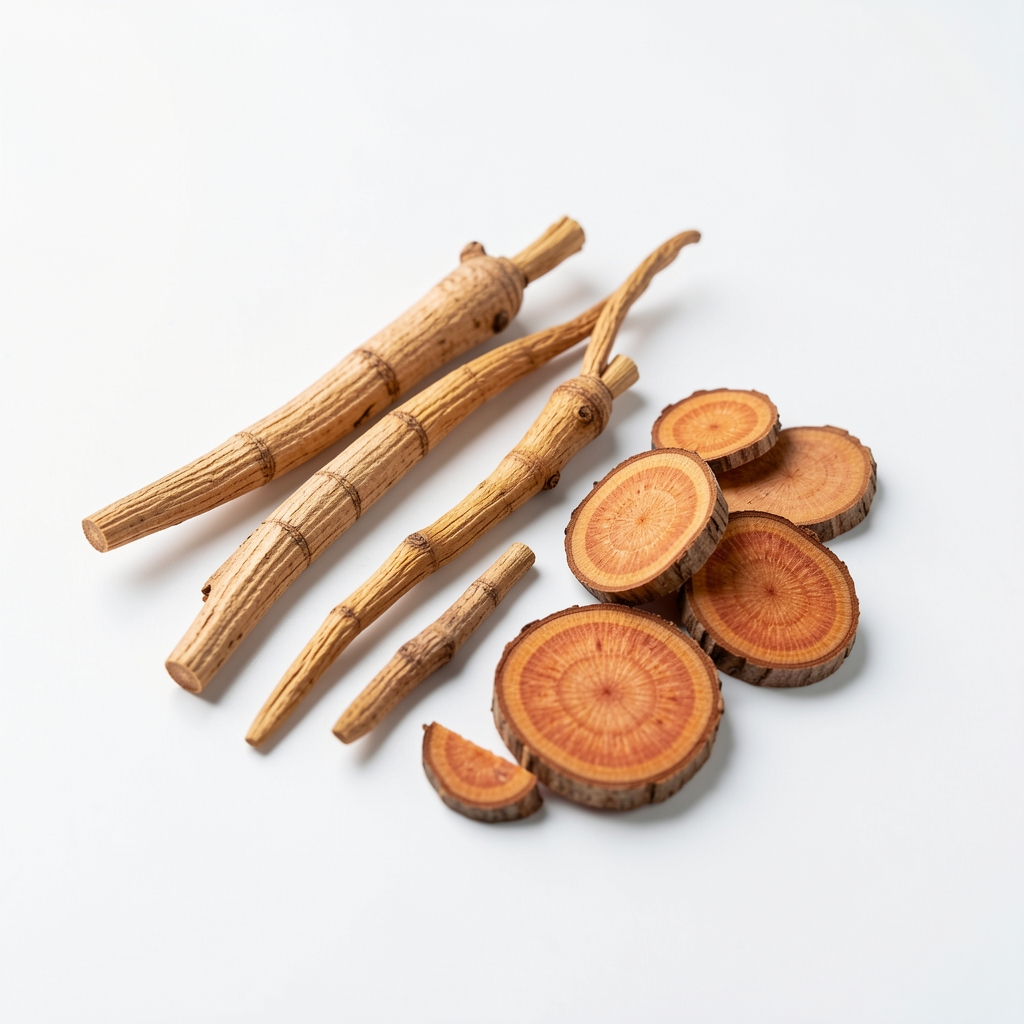
Panax ginseng is the longest-used adaptogen in traditional Asian botanical practice and has one of the most extensive published research bases of any botanical ingredient. The active constituents — ginsenosides — are a family of steroidal saponins, with over 100 individual ginsenosides identified in the literature. Commercially, the ginsenoside profile varies substantially depending on species (Panax ginseng vs. Panax quinquefolius vs. Panax notoginseng), plant part used (root vs. leaf vs. berry), and processing method (raw "white" ginseng vs. heat-processed "red" ginseng).
For formulation purposes, the species and part distinction is significant. Korean red ginseng — heat-processed Panax ginseng root — has the most robust published evidence base for the active-male performance nutrition demographic. The heat processing step converts certain neutral ginsenosides into more readily absorbed forms, which is one explanation proposed in the published phytochemistry literature for the generally stronger human trial outcomes observed with red ginseng compared to unprocessed white ginseng at equivalent doses.
Sourcing documentation for ginseng in the Indonesian market should specify: species (binomial nomenclature, not just "ginseng"), plant part, processing method, total ginsenoside percentage (with method of determination), and geographic origin. Korean-origin Panax ginseng carries the most extensive independent quality infrastructure, with the Korea Ginseng Corporation maintaining published quality standards that Indonesian importers can reference for documentation benchmarking.
Where the Evidence Base Ends: Honest Scope Limits
The published evidence base on adaptogens is substantive but bounded. Several relevant scope limits are worth noting explicitly. First, most published human trials use relatively short study durations — 8 to 12 weeks — and the question of whether observed outcomes are maintained or attenuated over longer continuous use periods is not well-addressed in the literature. Second, study populations are often narrowly defined: male, 20–45 years, athletic or active baseline. Extrapolation to older men, those with less active baselines, or those with specific dietary patterns is done with limited empirical support.
Third, the dose-response relationships for all three adaptogens remain insufficiently characterised in the published literature. Most studies use one dose level — the commercially standardised dose recommended by the extract manufacturer — and do not include lower or higher dose arms. This means the dose-response curve is mostly inferred from the single data point of the standard commercial dose, which is a limitation that nutritional research methodologists consistently flag.
For the active male reader evaluating an adaptogen-containing formulation, these scope limits mean that the published evidence base supports certain characterisations of these ingredients — they are well-researched relative to most botanicals, they have specific standardised forms with documented trial results — while leaving other questions open. An editorial-standard review acknowledges both what the research demonstrates and where the evidence base does not yet extend.
Articles published on Estravo Compendium are editorial in nature and reflect the writers' observations on everyday wellness practices. The content is not intended as professional advice, nor as guidance for the management of any specific condition. Readers with specific concerns about their daily routines are encouraged to speak with a qualified wellness professional. Estravo Compendium is an independent editorial publication focused on everyday wellness practices. The publication is not affiliated with any commercial, governmental, or institutional body.